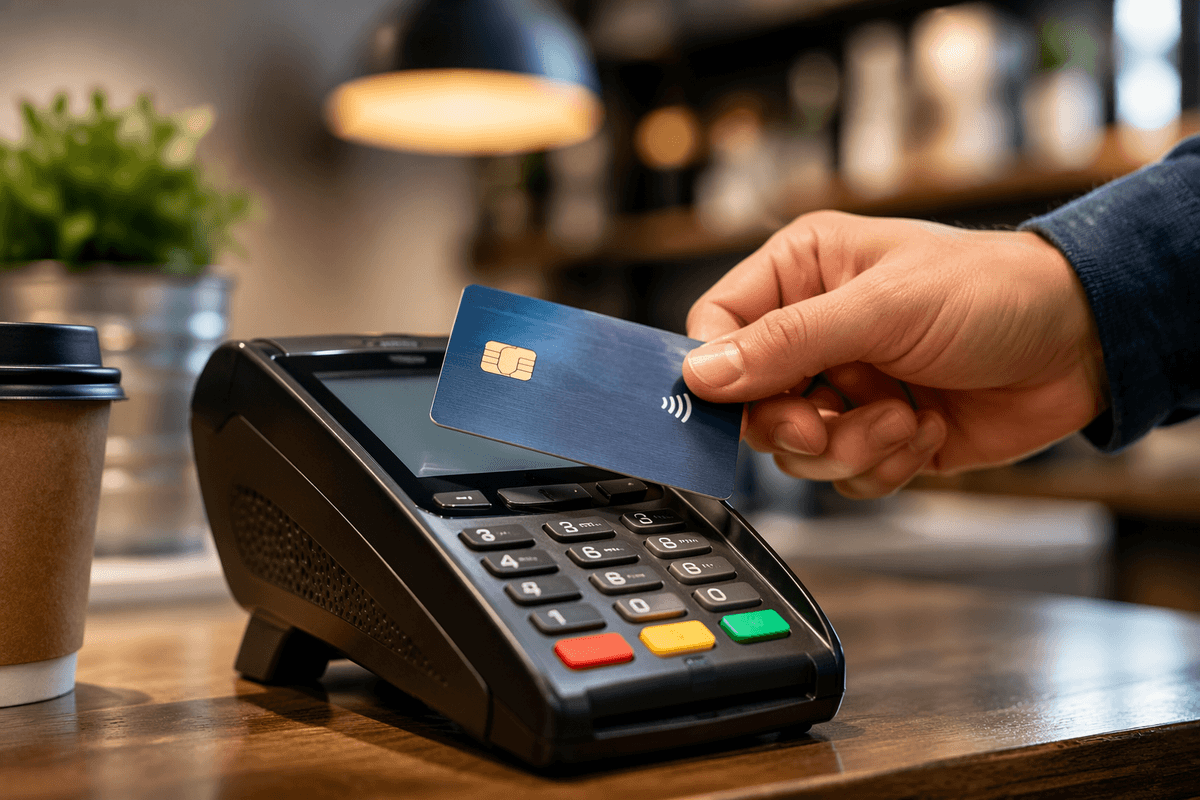
The account is open, the app is verified, and the “transfer” button suddenly feels like a point of no return. It’s rarely the dollar amount that creates the pressure—it’s the permanence. A small misclick can look like an expensive mistake, and the waiting period doesn’t help: deposits can take a few business days, and markets don’t pause while money is in limbo. Most people hover here longer than they expected, refreshing balances and second-guessing whether they picked the “right” provider or the “right” week to start.
The first transfer feels like a verdict because it’s the first time savings becomes something you can’t fully control day to day. In practice, it’s closer to setting up a pipeline than placing a bet. A $250 or $500 initial move is not a lifetime decision; it’s a systems test—bank link, settlement time, and whether you can tolerate seeing the balance fluctuate without intervening.
If you want to shrink the emotional risk, cap the first transfer at an amount you can afford to “misplace” for two weeks without touching rent, bills, or upcoming travel. Treat the friction—ACH delays, identity checks, minimums—as part of the process, not a warning sign. The win is getting money to arrive reliably on a schedule, because consistency matters more than the exact starting line.
Investing before your safety net is real

After that first deposit clears, the next impulse is usually to “make it count” by investing it immediately. That’s when a missing safety net shows up in ordinary places: an annual insurance premium, a car repair, an unexpected flight. The market doesn’t need to crash for this to hurt—what stings is having to sell on a random Tuesday because cash is trapped behind settlement times or because you never meant for your brokerage balance to be your checking account.
A workable test is boring but revealing: could you cover a month of expenses tomorrow without touching investments, credit cards, or a 401(k) loan? If not, investing isn’t “too risky” so much as poorly timed. People underestimate the cost of liquidity: high-yield savings yields less, but it settles instantly and doesn’t force decisions under pressure.
If the safety net is thin, treat investing like a staged rollout. Keep contributions small until you’ve built a cash buffer you won’t negotiate with, then scale up. The constraint isn’t willpower—it’s avoiding the first forced sale, because that’s the moment investing starts to feel like it “doesn’t work.”
Choosing an account that creates tax pain
Once there’s enough cash on the sidelines to avoid a forced sale, the next decision starts to feel administrative: where the investments should actually live. This is where people quietly create “tax pain” without realizing it, because the brokerage app makes every account look the same. A taxable brokerage is the easiest on-ramp, but it turns every dividend into a tiny taxable event, and it makes rebalancing or switching funds a real decision instead of a clean edit. Even a modest portfolio can generate a 1099 pile that arrives late, changes once, and complicates filing if you also have RSUs or side income.
Retirement accounts flip that friction. A 401(k) or traditional IRA can defer taxes, and a Roth IRA can protect future gains, but the constraint moves to access and rules: contribution limits, income limits (for Roth eligibility), and penalties if you treat it like an emergency fund. The mistake I see most is picking the “simplest” account today, then discovering two years later that every improvement requires selling and realizing gains.
A practical checkpoint is to match the account to the job the money has. If the goal is long-horizon compounding, prioritize tax-advantaged space first; keep taxable for overflow and near-term flexibility. It’s not about perfection—it’s avoiding a setup where good habits trigger avoidable taxes.
Buying complexity you can’t hold through losses
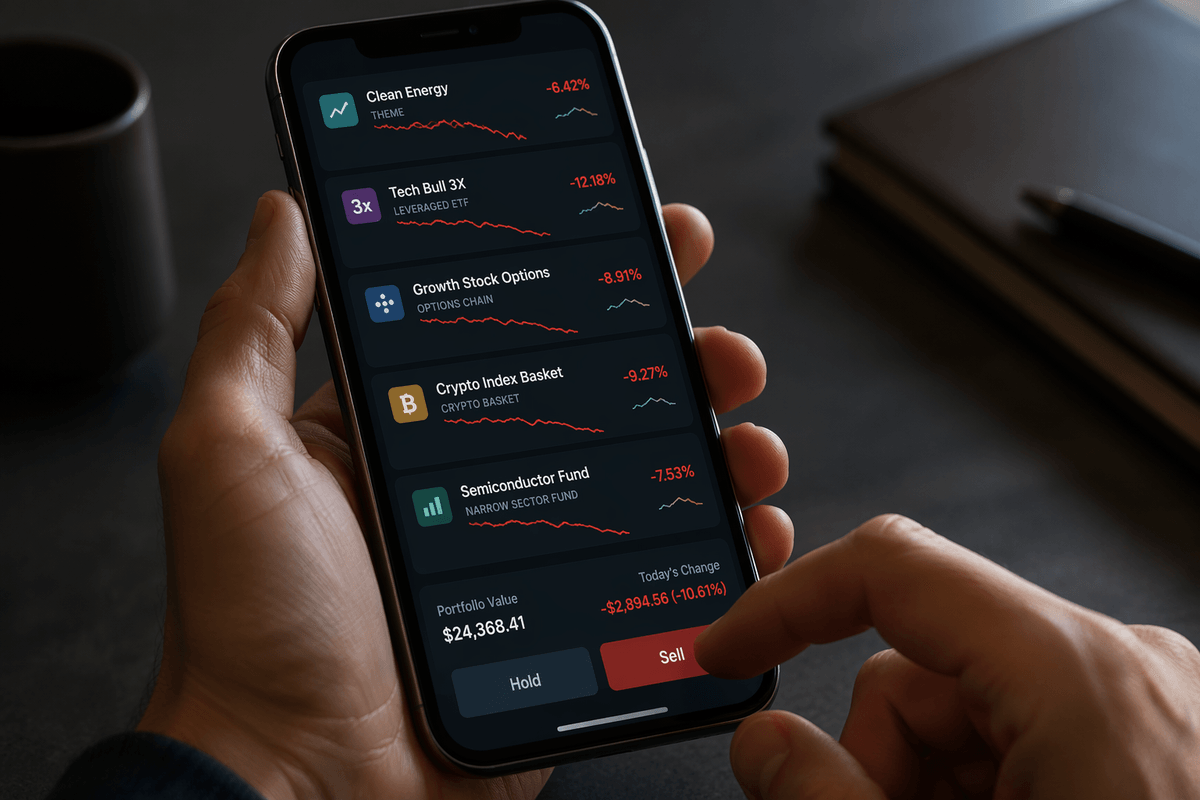
After the account choice, the next trap looks like sophistication. The app serves up “themes,” leveraged ETFs, option chains, and narrow sector funds with clean charts and confident descriptions. In a calm market, these products feel like a way to catch up faster. The constraint is psychological and timing-based: the first real drawdown rarely waits until you feel ready, and complex holdings don’t just drop—they behave strangely. A 2x or 3x fund can disappoint even when the index later recovers, and concentrated bets can stay underwater long enough to turn patience into panic.
The test isn’t whether you understand the pitch; it’s whether you can still hold after a 30–50% loss without “doing something.” Most people discover their true risk limit only after they’ve bought it. If selling would be your likely response, the complexity is too expensive, even with low explicit fees. The cost shows up as regret trades, tax realizations in taxable accounts, and the temptation to abandon the whole plan right when consistency was starting to work.
Build a simple core you won’t abandon
The next few buys are where the plan either becomes automatic or turns into a rotating watchlist. After the first scare—prices moving, headlines getting loud—most portfolios don’t fail because the math was wrong; they fail because the holdings invite constant judgment. A simple core reduces the number of “should I sell?” moments, which matters more than squeezing out an extra fraction of a percent in a good year. The constraint here is behavioral: if the portfolio is hard to explain in one sentence, it’s usually hard to stick with when it’s down.
In practice, a core can be as plain as one broad stock index fund plus one bond fund, set at a split you can live with through a bad quarter. Keep the number of funds low enough that rebalancing doesn’t become a tax or paperwork problem, especially in a taxable account. If you want room for curiosity, cap it—say 5–10%—so experimentation can’t hijack the entire outcome.
The point of the core isn’t to be impressive. It’s to be the set of holdings you can keep buying on schedule even when the market makes you feel late, early, or wrong.
Set rules for contributions, rebalancing, and temptation
Once the core is in place, the next risk is less about what you bought and more about how often you’ll interfere with it. Paychecks vary, expenses spike, and the market has a talent for looking “obviously expensive” right after you finally feel confident. A rule set reduces the number of decisions you have to win. Start with contributions: pick a fixed dollar amount and a fixed day tied to payroll, then decide in advance what happens in lean months (pause, reduce, or redirect to cash). The constraint is cash-flow realism, not motivation.
Rebalancing needs its own guardrails because “cleaning up” can quietly turn into market timing. A simple approach is calendar-based (once or twice a year) or threshold-based (only if an allocation drifts, say, 5 percentage points). In taxable accounts, add a tax constraint: prefer rebalancing with new contributions before selling.
Temptation is the last rule. Keep the “curiosity” sleeve capped, and require a waiting period before adding anything new. Most bad trades don’t survive 72 hours.
The moment you can call yourself an investor
At some point the question stops being “did I start at the right time?” and turns into “will I keep doing this when it’s boring or uncomfortable?” The shift usually happens after a small drawdown, a noisy headline, or an unexpected expense—when there’s a real chance to break your own rules. The constraint isn’t market knowledge; it’s whether the system survives a month where cash is tight and the portfolio is down at the same time.
You can call yourself an investor when three things are true: your safety cash exists without debate, your core holdings are simple enough that you can explain them quickly, and your contributions happen without needing a fresh burst of confidence. If the plan still depends on checking prices, waiting for “a better entry,” or swapping funds to feel in control, you’re not failing—you’re still building the habit that makes the math work.




![How to Become an Investor [Exactly What It Takes]](static/image/2026/07/14/2a4c5f88-5ccc-423a-b75c-d6c25c492ab7.png)