The real choice isn’t the prettiest village
I hesitated over the map at 07:18, thumb hovering between a pin in Bavaria and one on the Mosel, both labeled “storybook.” The rail times looked clean until the last leg turned into a bus with a 90-minute gap, and suddenly “just one village” meant losing an afternoon. It’s the kind of detail you only notice when you’re trying to make an 8-day loop feel roomy instead of rushed.
The real choice usually isn’t which village is prettiest—it’s which one is prettiest for your route. Iconic places (think peak half-timbered cores) trade charm for crowd flow: mid-day can feel like you’re walking in a slow-moving parade, especially in summer and on weekends. Quieter villages can deliver better evenings and cleaner photos, but the limitation is access: trains get you close, yet the final 10–25 km can be awkward without a car, and rideshares/taxis aren’t always waiting.
If you book stays 2–3 weeks out, you can still win by picking villages that sit on efficient corridors: a direct regional line, a lake with frequent boats, or a river valley with consistent buses. A rental car makes detours painless, but you pay in parking friction and the mental load of moving every day. I’d rather spend that energy on one golden-hour loop and a calm dinner than on another connection that barely syncs.
What makes a German village scenic
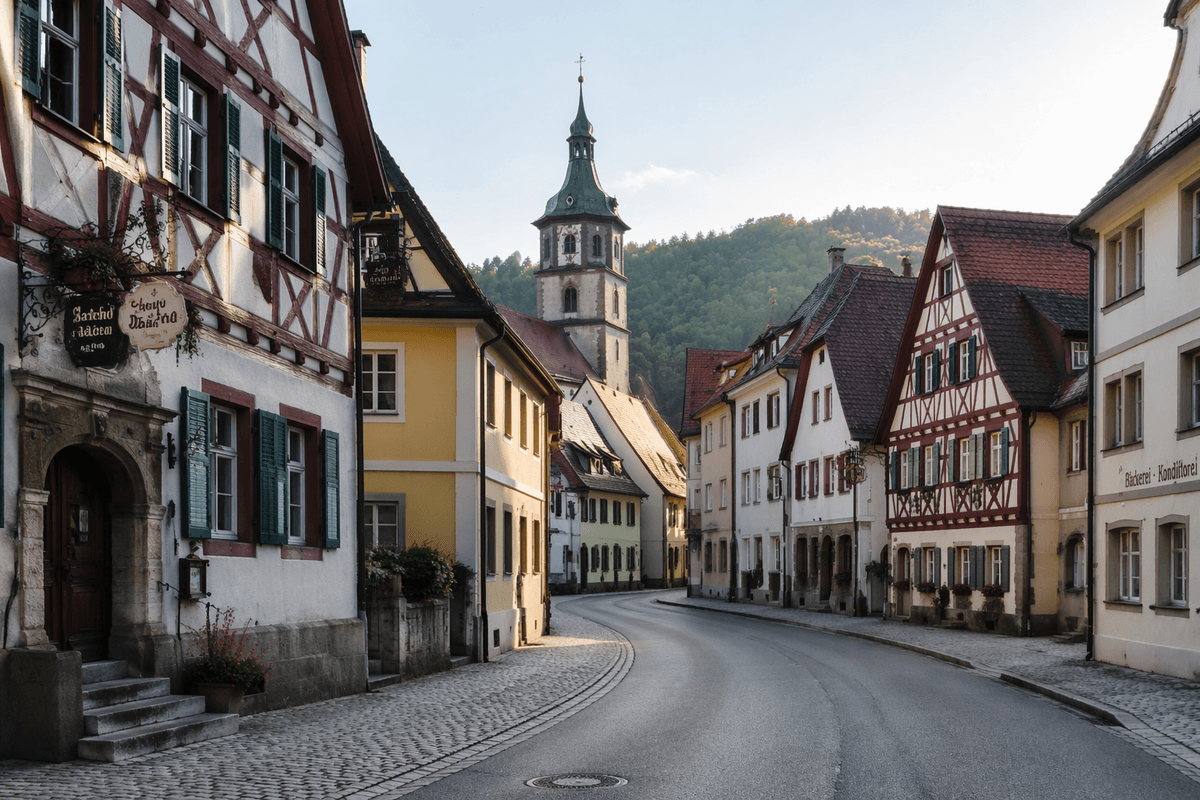
At 18:42 I was standing under a tilted half-timbered eave, waiting for a delivery van to clear a lane barely wider than its mirrors. The houses looked perfect in photos, but in real life the “scenic” part was a narrow window: five quiet minutes before the day-trippers regrouped and the street turned into a moving queue. It made me notice how much of village beauty in Germany is about timing, not just architecture.
What reads as scenic usually comes from a mix of textures and sightlines: half-timbering or pastel facades, a church tower that anchors the frame, and a street that bends just enough to hide the exit. River villages add reflections and a promenade; mountain villages add a horizon line that does half the work for your camera. The most photogenic cores are often the smallest, so crowd flow matters more than in a bigger town—midday can feel cramped, while early morning or the last hour before dinner is calm and genuinely local.
Access shapes the experience as much as the view. If the “final 10–25 km” is a bus every hour, scenic can become stressful, especially on Sundays or in shoulder season when schedules thin out. A car wins for lakeside pull-offs and quick hops between villages, but you’ll pay with parking hunts and one-way pedestrian zones; trains win for no-mental-load days, but they work best when the village sits directly on a regional line.
Half-timbered showstoppers worth the detour
I froze at the ticket machine with two minutes left on the platform clock, debating whether to gamble on a tight connection just to chase “better” half-timbering. The photo in my head was quiet cobbles and crooked beams; the reality was an announcement board blinking delays and a bag that suddenly felt heavier. That’s when I started sorting showstoppers by how hard they make you work.
If you want the classic, high-reward timber-core without a car-shaped headache, aim for places that sit on clean rail corridors. Limburg an der Lahn (between Frankfurt and Cologne) gives you a dense old town on a hill—great at golden hour, a bit compressed at midday when day-trippers arrive. In the Harz, Quedlinburg and Wernigerode feel more “stacked” and storybook than most small villages, but the trade-off is time: they’re best if you’re already threading north (Berlin/Leipzig/Hanover), not if you’re trying to squeeze them into a Rhine-to-Bavaria loop.
For a detour that behaves with an 8-day itinerary, I like one of these “pairable” stops: Michelstadt or Miltenberg if you’re based around Frankfurt/Würzburg (easy rail, short walks, calm evenings), or Schiltach/Gengenbach if you’re already committing to the Black Forest (prettier streets, but slower regional connections and earlier nights). Rothenburg ob der Tauber still delivers the postcard angles—just treat it like a dawn-and-dusk town, not a leisurely midday wander, and it stops feeling like a parade.
Lakes, Alps, and mountain-view villages
I stepped off the regional train at 16:11 in Mittenwald and immediately stalled by the station forecourt, because the mountains looked like a backdrop someone had dragged too close. Five minutes later I was on the main street, and the trade-off showed up fast: the view is “free,” but the prettiest angles sit on streets that fill up right after the last Munich day-trip trains arrive.
For Alps-with-a-village feel that doesn’t demand a car, Mittenwald and Garmisch-Partenkirchen are the easiest to “slot in” by rail—good for a solo traveler who wants a clean logistics day and a calm evening stroll. The limitation is that Garmisch reads more like a resort town than a tiny village, and in summer you’ll feel the crowd flow around the Zugspitze/Partnachklamm funnel. If you do rent a car, the payoff is flexibility: you can hop Mittenwald → Wallgau → Walchensee or swing by Oberammergau without waiting on buses that thin out early.
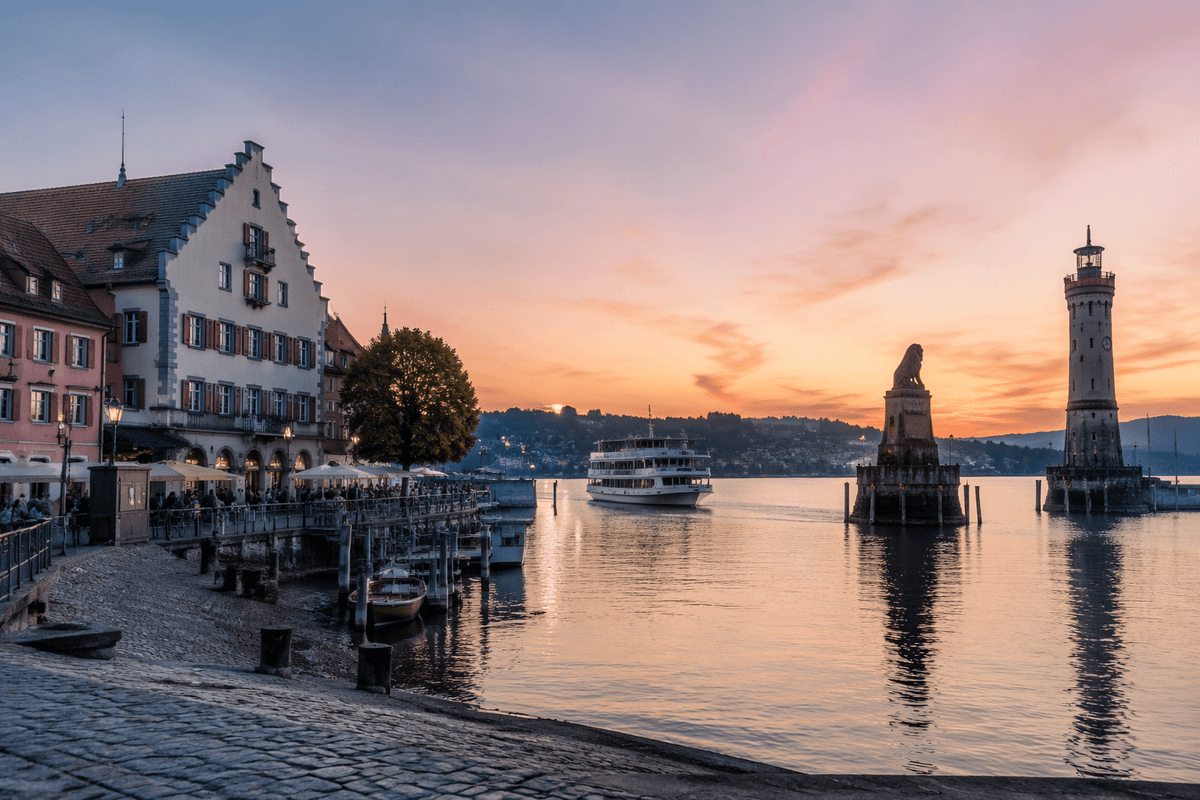
If your scenic ideal is lake + old-town texture, the Bodensee corners (Lindau on the island, Meersburg across the water) photograph better than many “Alpine” pins—and boats make the route feel intentional rather than inefficient. For the big mountain-wall moment, Schönau am Königssee/Berchtesgaden delivers, but it works best if you commit to an overnight; day-tripping there by train/bus can turn into a stopwatch exercise. I’d pick one lake base or one mountain base, then protect your golden hour instead of chasing both in the same day.
Wine-country villages along river bends
I remember leaning on the cold railing at 19:26 in Bacharach, watching a Rhine cruise slide past like a floating apartment block. On the map it looked like “one quick riverside stroll,” but the reality was a clock: shops were already closing, and the prettiest lane was half in shadow. River villages reward you fast, yet they punish lazy timing—arrive too early and you share the view with tour groups; arrive too late and you’re eating from a kiosk.
If you want wine-country charm with minimal friction, the Middle Rhine (Rhine Gorge) is the easiest rail win: Bacharach, Boppard, and St. Goar are on the river line, so you can do a photogenic loop without a car and still sleep somewhere quieter. The trade-off is crowd flow tied to boats and weekend getaways—midday promenades feel like a moving queue, while the last hour before dinner is genuinely calm. For castles, the views are “big,” but the villages stay small and can feel tapped out after one night.
The Mosel reads softer and more vineyard-forward—Cochem is the obvious base (and busiest), while Beilstein or Bernkastel-Kues feel more like evening places if you can handle slower connections. Trains run along the valley, but the limitation is the last few kilometers: buses thin out early, and taxis aren’t guaranteed. If you’re car-curious, this is where it pays—short hops between bends are effortless—just accept parking hunts and pick one village to linger in after the day-trippers fade.
My picks for one, three, five stops
At 21:07, with a half-built itinerary and a lodging tab open, I hit that familiar wall: do I lock in a base now or keep “options” and risk everything decent selling out. The difference between a clean 09:00 regional train and a 09:12 train plus an hourly bus is the difference between an unhurried lunch and checking your watch all day. So I started choosing stops that behave under time pressure.
If you only want one village-style hit, pick based on your spine route: Bacharach (Middle Rhine) if you’re between Cologne–Frankfurt, or Mittenwald if you’re doing Munich + mountains. Both work well by train, both reward golden hour, and neither needs a car to feel “complete”—but midday can be shoulder-to-shoulder when day trips peak, so plan an early arrival or a late stroll.
For three stops, I’d keep them on two corridors: Limburg an der Lahn (easy half-timbered fix), Bacharach (river bend evening), and Lindau (lake light + promenades) if your loop runs west/southwest. For five, add one Black Forest street town like Gengenbach (prettier evenings, slower connections) and one bigger mountain base like Garmisch (logistics-easy, less “tiny”). If you’re still undecided on car vs train: rent a car only for the Black Forest + lakes hop, then go back to rail—your photos improve when your day isn’t built around parking.