Foreclosure is done—your score still blocks housing
By the time the foreclosure is officially in the rearview mirror, the immediate chaos usually calms down: the calls slow, the mail thins out, and the budget finally has edges again. Then the housing search starts, and the credit score shows up like the foreclosure is still happening. A leasing agent quotes a higher deposit “because of the report,” or a lender’s pre-qual turns into a polite no with no clear path back. The frustrating part is the timing—your life moved on, but the scoring models didn’t. Before spending money on credit repair or taking on new debt, it helps to treat this like an audit: what is the bureaus’ version of your story right now, and which parts are still costing you approvals.
Even when the foreclosure itself is accurate and can’t be removed, it keeps dragging your score down because it changes how the rest of the file is read. Recent late payments leading up to the foreclosure can weigh as much as the foreclosure notation, and any remaining balances—like a charged-off second lien, unpaid HOA dues that got sent to collections, or a lingering deficiency balance—can keep the “risk” signals active. Add in high utilization from cards used to survive the transition, and the score ends up reflecting current strain, not just a past event. This is why two people with the same foreclosure year can get very different rental outcomes: the score isn’t only punishing the foreclosure, it’s reacting to the fresh mess around it.
Housing gatekeepers also don’t all read credit the same way, which is where expectations get expensive. Many landlords focus less on the score itself and more on whether there are open collections, recent unpaid utilities, or patterns of missed payments in the last 12 months—things that suggest another disruption is likely. Mortgage underwriting can be stricter and more rule-bound, but rentals can be unpredictable: one property might deny automatically under a threshold, another might approve with a larger deposit, and a third might want a co-signer regardless of the number. That uncertainty is why the next step isn’t “raise the score fast,” it’s figuring out what’s still actively blocking housing so the first fixes actually change decisions, not just the number.
First decision: what’s actually hurting your score now
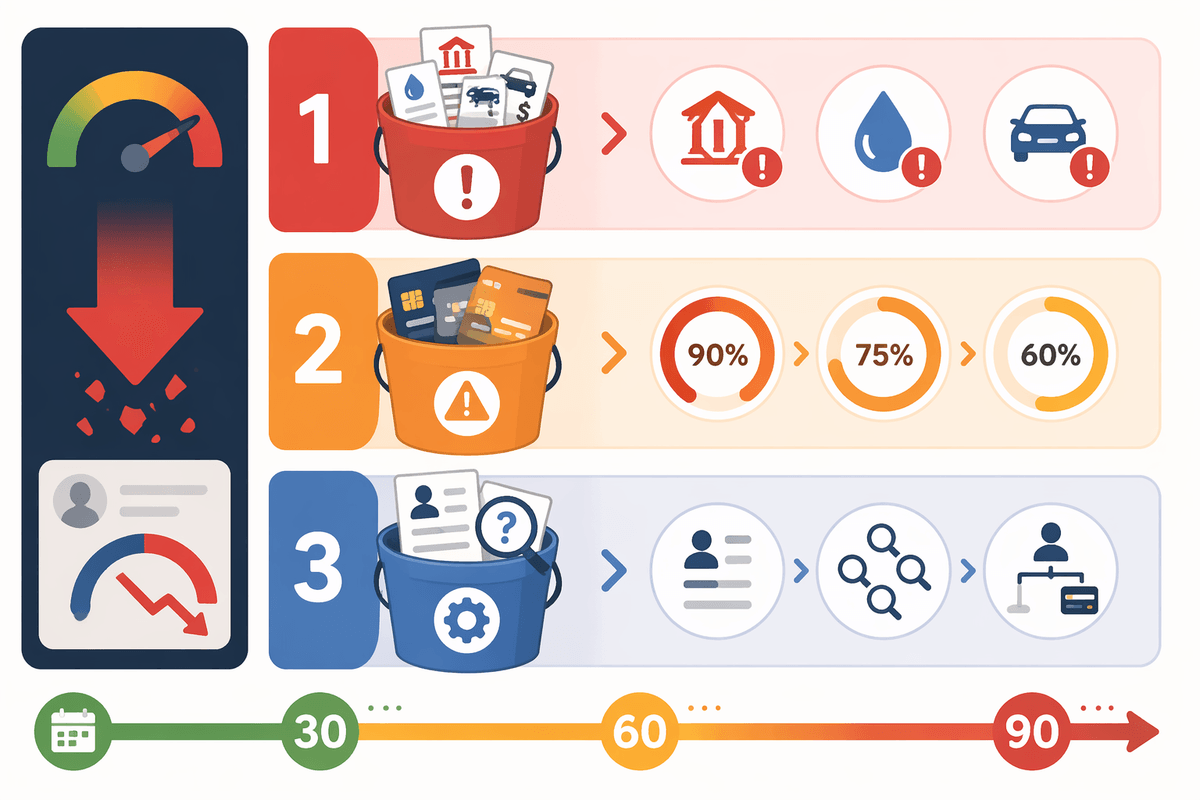
The fastest way to waste money after a foreclosure is treating “credit repair” like a single lever. Start by pulling all three bureau reports and lining them up side by side, because the blocking item is often not the foreclosure entry—it’s the newest negative data still updating. Look for anything with movement in the last 6–12 months: a collection that just reported, a charge-off still showing a monthly balance, or late payments that hit after you were already in trouble. Those “recent” signals tend to depress scoring more than older ones, and they’re also what many rental screens flag first.
Next, separate score drag into three buckets and rank them by housing impact and fix cost. Bucket one is “open and unpaid” (collections, charged-off second liens, deficiency balances, utilities). Even small balances can trigger denials, but paying blindly can restart reporting or waste cash you need for deposits. Bucket two is utilization and revolving stress—cards near limits can keep the file looking unstable even if you haven’t missed a payment lately. Bucket three is structure: too few active accounts, too many recent inquiries, or only one remaining tradeline. The decision point is practical: which bucket is both addressable in 30–90 days and likely to change an approval, not just add points on paper.
Stop the bleeding before chasing point jumps
When the report shows “movement” on negatives, the first win is getting it to stop moving. A charge-off that still updates every month, an old card that keeps flipping between “past due” and “charged off,” or a collection that’s reporting a fresh balance can keep your file looking like it’s still unraveling. That’s when people get tempted by point-chasing tactics—opening new credit, stacking disputes, paying random small collections—because the score feels stuck. But if negative tradelines are still actively updating, the new positives often get muted, and you’ve added cost (fees, deposits, hard pulls) without changing how a landlord screen reads the last 60 days.
So the practical sequence is boring on purpose. Get every account to a stable status: bring any still-open accounts current, set autopay for at least the minimum, and stop revolving balances from bouncing above 70–90% of limits. If cash is tight, prioritize the items that can create a new late payment next month over the ones that are already “dead” on the report. The constraint here is real: every dollar that goes to an unnecessary payoff is a dollar not available for a higher security deposit, application fees, or moving costs—expenses that can matter more than a 20-point swing.
Once the file is no longer generating fresh negatives, point gains start to stick. The goal isn’t a dramatic jump; it’s making the report predictable enough that the next steps—disputes, settlements, and new credit—change the story instead of just adding noise.
Dispute errors carefully—fast win or backfire

After the file stops generating new damage, the temptation is to “clean it up” with disputes. Sometimes that works—an incorrect late payment date, a duplicate collection, a balance that should be $0 after the foreclosure, or the wrong status (“open” instead of “closed”) can cost real points and trigger rental denials. But disputes aren’t free. They take time (often weeks), they can freeze momentum in the middle of a housing search, and a poorly framed dispute can prompt a creditor to update an old tradeline, making it look freshly active.
The safest approach is to dispute only what you can name precisely and document. Start with factual mismatches: identity errors, wrong amounts, wrong dates, accounts that aren’t yours, or the same debt reported twice. Avoid disputing accurate foreclosure-related lates just to see what happens; that’s when reinvestigations can “verify” the item and refresh reporting details. Timing matters too—if you need an approval in the next 30–45 days, sending a stack of disputes can create uncertainty right when a landlord or lender pulls the report.
Think of disputes as a scalpel, not a sweep. One or two high-confidence fixes can produce a fast, clean improvement; a dispute spree can burn months and leave the report louder than it started.
Collections: pay now, settle, or wait it out
The next fork in the road is collections, because they behave differently depending on who’s screening you and which model is scoring you. A $120 utility collection can be the reason a property manager says no, while a lender might care more about whether it’s paid and how recently it updated. The constraint is cash: paying everything feels clean, but it can drain the same funds you need for application fees and a larger deposit—without guaranteeing the “paid” status will show up before the next credit pull.
Pay now when (1) you’re actively applying for rentals, (2) the collector can confirm in writing how the account will be reported after payment, and (3) the balance is small enough that it doesn’t break your move-in budget. Settle when the balance is meaningful and you can trade money for certainty, but don’t ignore the reporting detail: a settlement can still show as “settled for less,” which is usually fine for rentals but can be a speed bump for some underwriting. Waiting it out is rational when the debt is older, you’re not in an immediate housing window, and payment would restart contact and attention—especially if you can’t get clear terms in writing.
Whatever you choose, control the timeline: ask for written terms, pay in a way you can prove, and track when the bureaus should update. A collection that stops moving is often more valuable than one that’s “handled” messily.
Add fresh positive credit without new damage
Once collections are handled (or at least no longer bouncing around), adding new positives starts to matter—but only if it doesn’t create fresh dings. The usual mistake is applying for multiple cards because a “pre-qual” banner shows up, then eating three hard inquiries and one denial in the same week. If housing is the priority, the constraint is timing: new accounts can temporarily drop scores and look risky to a landlord even when you’re doing the “right” thing.
Start with the least volatile options: a secured card from a reputable bank or credit union, or a credit-builder loan where payments report monthly. Pick one, not three. Put a small recurring bill on the card, autopay the statement balance, and keep the reported balance low (think under 10–30% of the limit) so utilization doesn’t spike. Avoid store cards and “no credit check” offers with high fees—they add tradelines, but they also add cost and suspicion right when you need the file to look calm.
After two to three clean reporting cycles, the new tradeline begins doing what you wanted: recent on-time payments with no drama. That’s when a second account can make sense—if the first one is stable and you’re not in an active application window.
Use housing-related tradelines to prove stability
After a few clean cycles on a secured card or credit-builder loan, the next thing that changes actual housing outcomes is proving “housing stability” in a way screening systems recognize. That’s where rent and utility reporting can help—not because it erases the foreclosure, but because it adds a new, boring pattern tied to shelter costs. The friction is that not every service reports to every bureau, some landlords won’t participate, and paid rent history doesn’t always move the score as much as people expect.
If you can get rent reporting through a property manager portal or a reputable third-party service, treat it like underwriting prep: one lane, consistent payments, no reversals. Pair it with utilities in your name that report (or at least stay spotless), and avoid “stacking” subscriptions that create fees without changing approvals. The goal is simple: when someone pulls the report, the most recent housing-related lines look calm and current, even if the foreclosure is still sitting there.
A realistic 12–24 month rebuild plan you’ll follow
At this point the plan stops being “fix credit” and starts being a calendar you can live with. Month 0–3 is about staying boring: every remaining account on autopay, utilization kept intentionally low, and no applications unless housing forces the timing. If a collector won’t give clear written terms, the default is patience—cash on hand for deposits beats a rushed payoff that updates the tradeline at the wrong moment.
Months 4–9 is where the file starts looking stable to screeners: one primary positive tradeline reporting cleanly, plus rent or utilities showing consistency without late reversals. Months 10–24 is refinement, not reinvention—add a second tradeline only after six+ spotless cycles, limit hard pulls to planned windows, and review reports quarterly for quiet errors. The expectation shift is subtle: approvals come less from a magic score jump and more from a year of “nothing went wrong” on paper.