Why “electrolyte loss” feels different than thirst
Your mouth can feel fine, but your legs start to get oddly heavy on the walk back to the car. You already finished a full bottle, yet the “dry” signal never really showed up—just a quiet drag in your energy, a faint headache, or a twitchy tightness that wasn’t there at the start.
That’s part of why electrolyte loss can feel different than simple thirst. Sweat doesn’t only lower your water level; it pulls out charged minerals that help water stay where it’s useful. When you replace losses with only plain water, it can sometimes dilute what’s left in circulation, so the body still hesitates to move fluid into working muscles and nerves as smoothly. The result can feel like thirst’s cousin: not desperate for a sip, just slightly off.
Because those signals are inconsistent, people often misread them as “I’m out of shape today” or “I didn’t sleep enough.” In reality, the pattern tends to show up after salty sweat, heat, or long sessions—when you’re drinking plenty, but not quite getting back what you actually lost.
The electrolyte mix coconut water naturally contains

You crack open a carton expecting it to taste like “just water,” but it lands more like a lightly sweet juice. That small difference matters, because coconut water isn’t only fluid—it comes with a built-in mix of dissolved minerals and a bit of carbohydrate, so it can feel like it “gets in” better after a hot workout than another plain bottle.
The standout electrolyte is potassium. Coconut water tends to provide a noticeable amount compared with many everyday drinks, which is one reason people reach for it when they feel that post-sweat flatness. Alongside potassium, there’s usually a modest amount of sodium, plus smaller traces of things like magnesium and calcium. The exact numbers vary by brand and even by harvest, so the same “one serving” doesn’t always replace the same losses.
The natural sugars are part of the package too. In mild to moderate sweat situations, a little carbohydrate can help fluid absorption and make it easier to keep sipping. But if your stomach is already touchy from heat or intensity, that sweetness and the drink’s natural acidity can also sit heavier than you expect.
How potassium supports fluid movement inside cells
Halfway through cooling down, you might notice you’re peeing again, yet your calves still feel a little “grippy,” like the water you drank didn’t quite reach the places you wanted it to. That’s often the moment people assume they simply need more fluid, even though the issue can be more about where that fluid ends up.
Potassium is one of the main minerals that sits inside your cells, and it helps set up the gradients that let water follow where it’s needed. When potassium is running low from steady sweating (especially across repeated days), muscles and nerves may feel less smooth—more prone to tightness, sluggishness, or that faint buzzing fatigue—despite normal-looking thirst.
Coconut water’s potassium can support that “inside the cell” side of rehydration, which is why it sometimes feels noticeably better than plain water after mild to moderate losses. But it doesn’t act alone, and the improvement can be inconsistent: if your sweat was especially salty, potassium helps, yet it may not fully solve the heavier, drained feeling by itself.
Sodium’s role reveals coconut water’s main limitation
It’s usually the salt that gives it away. You finish the drink and still find yourself thinking about chips, pickles, or “real food,” even though you’ve already taken in plenty of fluid. Sometimes the tongue feels a little flat, and the next glass of plain water tastes almost too clean—like it’s not sticking.
Sodium is the main mineral that stays outside cells and helps the body hold onto water in the bloodstream between sips. When sweat has been salty, sodium loss can make it easier to pee out what you drink and harder to keep circulation feeling steady, especially in the hours after heat or a long session. That’s why you can look “hydrated” on paper—clear urine, lots of bottles—while still feeling washed out.
This is where coconut water runs into its main limitation. It’s often strong on potassium but only modest on sodium, so it may feel great after lighter sweating yet underdeliver after heavy, salty losses. In those situations, the same carton that usually perks you up can land as “nice, but not enough,” and the body keeps asking for salt in a way sweetness can’t really answer.
Sugar, acidity, and digestion shape how it lands
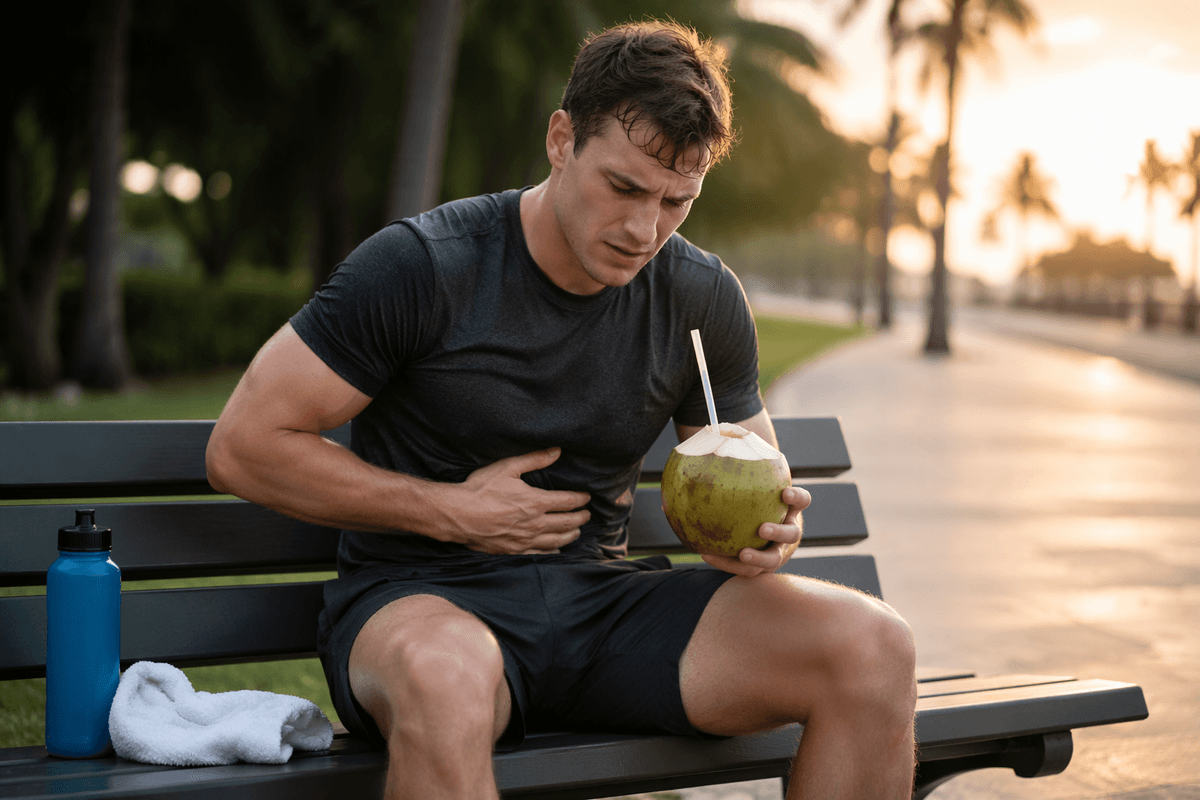
Sometimes it’s not your energy that changes first—it’s your stomach. The same coconut water that tastes clean and refreshing on one day can feel a little sharp the next, especially if you drink it quickly while you’re still hot and breathing hard. That’s when the sweetness starts to register as “more than I expected,” and the drink can sit heavier than plain water.
A small amount of sugar can help fluid move through the gut because it pulls water along with it, which is part of why coconut water can feel like it absorbs faster after mild to moderate sweating. But that benefit isn’t unlimited. If you’re already dehydrated or your gut is jostled from intensity, extra sugar can slow emptying or feel sloshy, and the natural acidity can add to that unsettled, burpy feeling.
You’re taking in fluid, but nausea or bloating makes you stop early. In practice, coconut water “works” best when your digestion is cooperating—and less well when heat, speed, and a sensitive stomach make even a good drink hard to keep down.
When “more is better” backfires unexpectedly
The backfire usually shows up as a quiet mismatch: you keep pouring coconut water because it’s “electrolytes,” yet you’re still peeing a lot and your head feels a little floaty when you stand up. It can be confusing, because the drink tastes like it should be solving the problem.
One reason is that “more” often means more potassium and more sugar, not necessarily more sodium. If your sweat has been salty, piling on a low-sodium drink may leave the bloodstream side of hydration under-supported, so the body keeps letting fluid go. At the same time, extra sweetness can start to feel sticky or heavy in the gut, especially when you’re already hot.
One carton feels great after a lighter session, then two or three make you feel sloshy, still salt-hungry, and oddly tired. That’s less a sign coconut water “doesn’t work,” and more a hint that the missing piece is often salt, not another sweet sip.
Choosing coconut water versus sports drinks or water
The choice usually gets decided in a small moment: you look at your urine and it’s pale, yet your body still feels “flat,” and plain water suddenly seems like it’ll just run right through you. Other times it’s the opposite—your stomach feels touchy, and the idea of anything sweet sounds like work.
For mild to moderate sweating, coconut water often sits in a useful middle ground: more “pull” than plain water because it brings potassium and some carbs, but less like a syrupy jolt than many sports drinks. If you’re a salty sweater, keep craving salty food, or feel washed out hours later, a standard sports drink (or water plus something salty to eat) can match what you’re losing more directly than coconut water can.
Plain water still earns its place when sweat loss is light, you’re eating normal meals, or sweetness makes you back off drinking altogether. The trick is noticing which problem you’re actually solving—thirst, stomach comfort, or that lingering “not quite refilled” feeling.