Why “healthy eating” still leaves common nutrient gaps
It’s easy to look at a receipt that includes a salad, a grain bowl, and a smoothie and assume the basics are covered. But “healthy” often just means lighter or fresher-feeling, not necessarily more varied. When the same few meals repeat—chicken and rice, yogurt, a sandwich, a bagged salad kit—your diet can feel steady while certain nutrients quietly stay low.
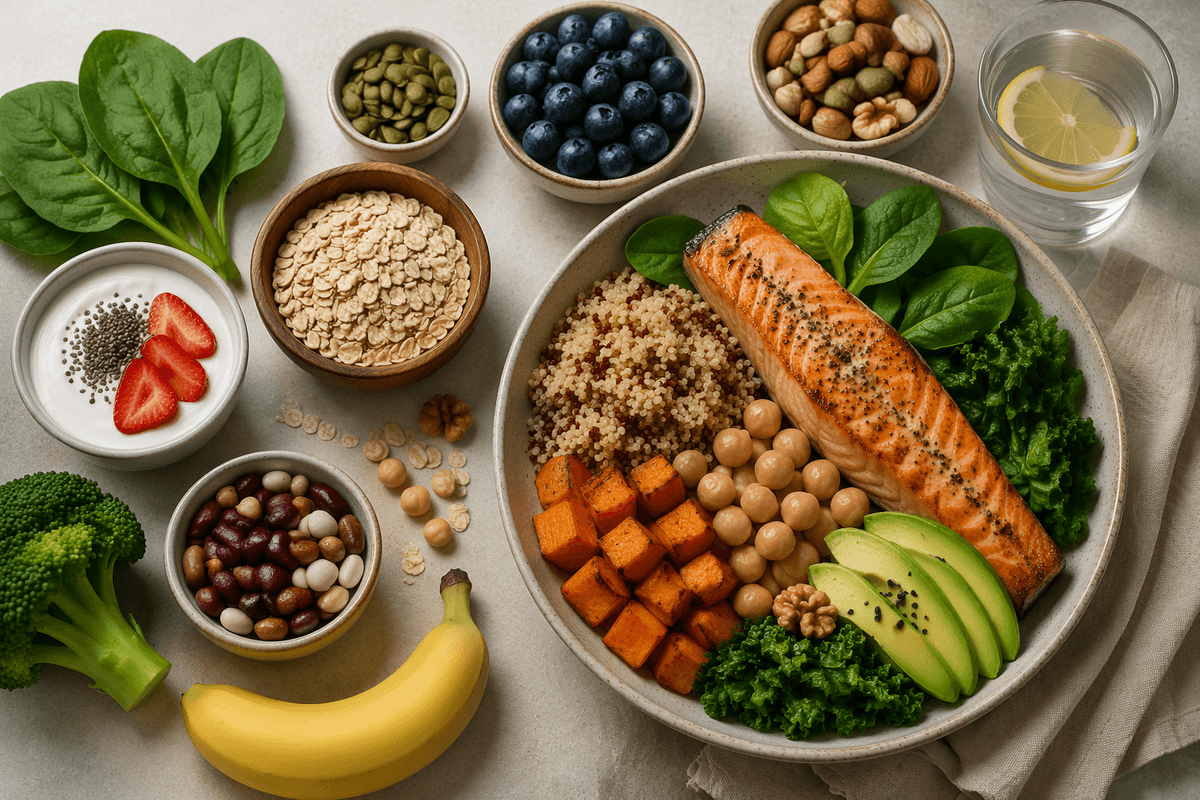
A lot of the gaps come from what gets crowded out. Refined staples and snack foods take up calories without bringing much magnesium, potassium, or fiber, so you can feel full and still not get the “background” nutrients that show up most reliably in beans, leafy greens, nuts, and whole grains. If seafood rarely makes it into the rotation, omega-3 intake tends to be inconsistent, especially when plant sources are used only occasionally.
Fortified foods are another common missing piece. If milk, fortified alternatives, or fortified cereals aren’t regulars, vitamin D can be hard to come by through food alone. None of this always feels dramatic day to day—more often it’s just a pattern that looks fine on the surface, but stays narrow underneath.
Vitamin D shortfalls and the indoor lifestyle effect

Sometimes the clue shows up in small routines: lunch eaten at a desk, errands done in a car, a quick walk that happens before the sun really feels “strong.” You can be outside regularly and still not get much UV exposure if it’s brief, shaded, early or late in the day, or mostly filtered through windows. And with sunscreen (a good habit for skin), the body’s own vitamin D production may drop even further—so the “normal” modern day can quietly push vitamin D intake into a waiting game.
Food doesn’t always rescue that gap. Vitamin D naturally concentrates in a short list of foods—fatty fish and a few others—so if seafood is rare, you’re often relying on fortification without realizing it. That’s where patterns matter: skipping milk, not using fortified alternative milks, and choosing breakfast items that aren’t fortified can turn vitamin D into an occasional nutrient rather than a steady one.
One week might include salmon or a fortified yogurt, and the next week is mostly sandwiches, noodles, and snacky sides. Nothing about that necessarily feels “unhealthy,” but vitamin D tends to reflect the indoors-and-repeats lifestyle more than people expect.
Magnesium gets squeezed out by refined staples
The first sign is often how “normal” the plate looks: a pasta bowl, a deli sandwich, a breakfast bar, maybe a side salad that mostly tastes like dressing. Nothing feels extreme, and the day still adds up to plenty of calories. But if most of those calories come from white flour, white rice, chips, crackers, and sweet snacks, magnesium tends to be the nutrient that quietly gets edged out.
Magnesium shows up most reliably in foods that still have their original structure—beans, nuts, seeds, leafy greens, and whole grains. When grains are refined, the parts that carry more minerals are stripped away, so the staples that feel easiest to build meals around often contribute less than people assume. It can also get lost in the “healthy swap” cycle: a smoothie that’s mostly fruit, a yogurt that isn’t paired with nuts, a salad that doesn’t include beans or seeds.
One day includes a handful of almonds or a burrito bowl with black beans, and it feels like you covered it. Then the next few days slide back into bread, noodles, and snack food because they’re convenient and predictable. Over weeks, that repeat pattern can make magnesium feel like a sometimes-nutrient instead of a steady background one.
Fiber is more than digestion, it’s daily structure
You notice it when the day’s food is “fine,” but your appetite doesn’t quite settle—like you ate lunch and still want something an hour later. It’s easy to blame willpower or stress, especially if dinner is coming from a familiar rotation: a sandwich, a bowl of noodles, a couple of snacks. But when most of the carbs are refined and most of the produce is a garnish, fiber can be the quiet missing piece that makes meals feel less anchored.
Fiber isn’t just about what happens in the bathroom. It’s part of the physical structure of food—the chew, the bulk, the way it slows how quickly a meal moves through you. When that structure is stripped away (white bread, crackers, fries, sweet drinks), the meal can hit fast and fade fast, so hunger and snacking cues show up more often. Over time, that can make the whole day feel a little “uncontained,” even if calories look normal.
What trips people up is that fiber doesn’t always come from the foods that read as healthy. A salad kit without beans, a smoothie without seeds, a grain bowl built on white rice can all look balanced while staying low on the parts that actually build fiber day after day.
Omega-3 fats: the fish gap and plant limitations
You can feel it in the small decisions that happen on autopilot: the chicken option instead of fish, the avocado add-on that feels like it “counts,” the salad that’s technically healthy but built on the same few ingredients. Omega-3s are one of those nutrients that can seem present because you’ve heard the right words—nuts, seeds, olive oil—yet still be oddly inconsistent week to week.
The common gap is simply that fatty fish isn’t a regular. Many restaurant and convenience meals lean on poultry, beef, cheese, and fried oils, which can make omega-3 intake feel like an occasional event rather than a baseline. And when fish does show up, it’s often breaded or served in a small portion, so the “I had seafood” memory can outpace what actually landed on your plate.
Plant sources help, but they come with a quiet limitation. Flax, chia, walnuts, and some oils provide ALA, which the body has to convert into the EPA and DHA forms most people associate with fish. That conversion may be inefficient, so sprinkling seeds once in a while can feel reassuring without fully replacing a steady fish pattern—especially if those foods aren’t truly daily.
Iron and B12: when “low energy” has two stories
It can show up as a very specific kind of tired: you slept, you ate, you even had coffee, and still feel like you’re moving through the day with a small weight attached. It’s easy to assume it’s just a busy week, or that you “need more protein.” But low energy has more than one nutrition story, and iron and vitamin B12 are two of the most commonly mixed up because the day-to-day feeling can overlap.
Iron tends to get shaky when meals are built around refined carbs and familiar proteins that don’t bring much iron along—chicken sandwiches, pasta, snack plates, salads without beans or red meat. And even when iron is technically present, it doesn’t always land the same way: iron from plants (like beans and leafy greens) is generally less easily absorbed, and it can be further blunted when those meals are paired with calcium-heavy items or lots of tea/coffee around the same time.
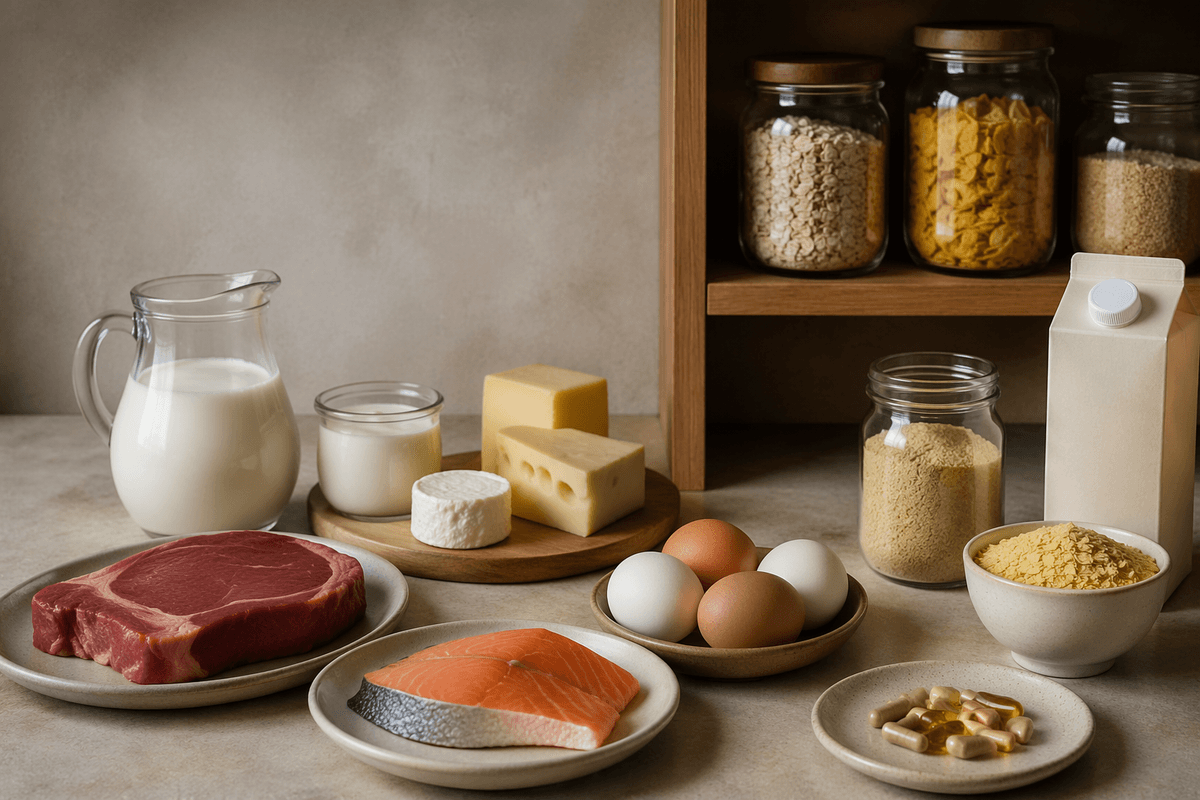
B12 has a different kind of trap. It’s mostly found in animal foods and fortified products, so the risk rises when someone eats little meat and doesn’t regularly use fortified cereals, milks, or nutritional yeast. With convenience eating, the pattern can swing—some weeks include eggs or dairy, other weeks barely do—so the “I’m sure I get it” feeling may be more confidence than consistency.
Iodine, potassium, and calcium: quiet gaps with big roles
You notice it in the little substitutions that don’t feel like “diet changes” at all: skipping the banana because it bruised, swapping the side salad for fries, ordering coffee with whatever milk happens to be on hand. Nothing feels off in the moment, but over time those small defaults can leave iodine, potassium, and calcium unusually quiet in the background.
Iodine is the easiest to miss because many people assume “salt is salt.” If most meals come from restaurants and packaged foods, you may be getting plenty of sodium while still not using much iodized table salt at home. Meanwhile, if seafood is rare and dairy isn’t a regular, iodine can become more of an occasional nutrient than a steady one, even when the diet looks normal on paper.
Potassium and calcium often disappear for a simpler reason: they’re tied to foods people stop buying when they’re busy. Potassium tracks with produce and beans—potatoes, bananas, citrus, leafy greens—so it drops when meals are mostly refined grains and snacky sides. Calcium tends to rely on dairy or fortified alternatives, and if that’s inconsistent (or the portion is small), it’s easy to feel “fine” while the pattern stays thin.